Amit Shah sets goal for illegal immigration-free India, stresses on border security
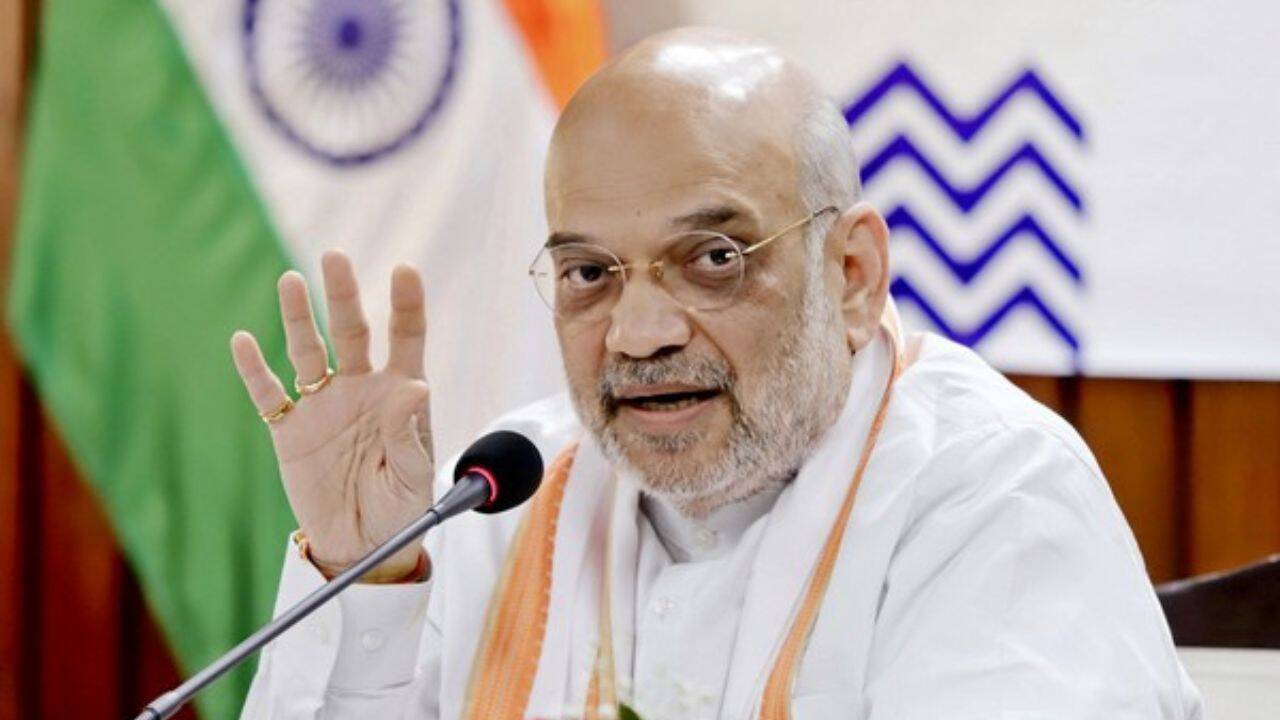
NEW DELHI: Home Minister Amit Shah on Tuesday announced that the Narendra Modi government has set a goal to make India free of illegal immigration within a "very short period of time." Speaking at the valedictory session of the National Security Strategy Conference (NSSC) organised by the Intelligence Bureau, Shah said the Centre had reached out to border states over the past eight months, sharing with them a document outlining a quadrangular approach to border security.
This approach designates border guarding forces, state and district administrations, relevant central government agencies, and local citizens as key stakeholders in securing the nation's borders. The conference, attended by over 850 officials from central security agencies, state and union territory police, and intelligence bodies, focused on anticipating security trends and challenges over the next 15–20 years and devising strategies to prevent them.
Shah reiterated that "this country is not a dharamshala" and that "only citizens have the right to live here." He described illegal immigrants as a threat to the country's security and economy, and warned that they could trigger "unnatural demographic shifts." The home minister stressed that challenges should be identified and addressed before they escalate, saying, "By creating such an ecosystem, we will be able to create a secure, infiltrator-free and narcotics-free India."
Referring to Prime Minister Narendra Modi's vision of a developed nation by 2047, Shah said robust internal security would be a prerequisite. He commended state police forces, central agencies, and the Central Armed Police Forces (CAPFs) for eliminating challenges in three major hotspots: Jammu and Kashmir, Left-wing extremism-affected areas, and the northeast. He suggested that earlier governments had failed to anticipate these problems, causing the nation to bear their brunt for decades.
Shah cited the dismantling of the Popular Front of India (PFI) network during multi-state raids in September 2022 and the subsequent ban on the organisation as "an excellent instance of Centre-state coordination." He also emphasised the need to implement the country's first anti-terror doctrine, PRAHAAR, to "eradicate terrorism and dismantle the terror ecosystem."
On fugitives, Shah said the government had strengthened its anti-fugitive drive, deporting 274 fugitives from various countries between 2019 and 2026. He urged all states to bring fugitives back to face the law in India.
The home minister also highlighted global instability, energy security concerns, supply chain disruptions, and rising radicalisation through cyber misinformation as key challenges. He said the security policy would take these into account and aim to address them effectively.
Addressing the drug menace, Shah sought cooperation from states in making India narcotics-free. He asked state police forces to implement the Narcotics Control Vision Document 2026-2029 on the ground, focusing on three Ds — detect, disrupt, and destroy — to achieve a "drug-free India."
Finally, Shah urged officers to use integrated data banks such as CCTNS, ICJS, Natgrid, and NAFIS to develop actionable intelligence through data integration and analysis, including the use of artificial intelligence to identify modus operandi and prevent future challenges.







