Amazon Halts Cargo Deal With 21 Air After Miami Runway Crash Kills Five
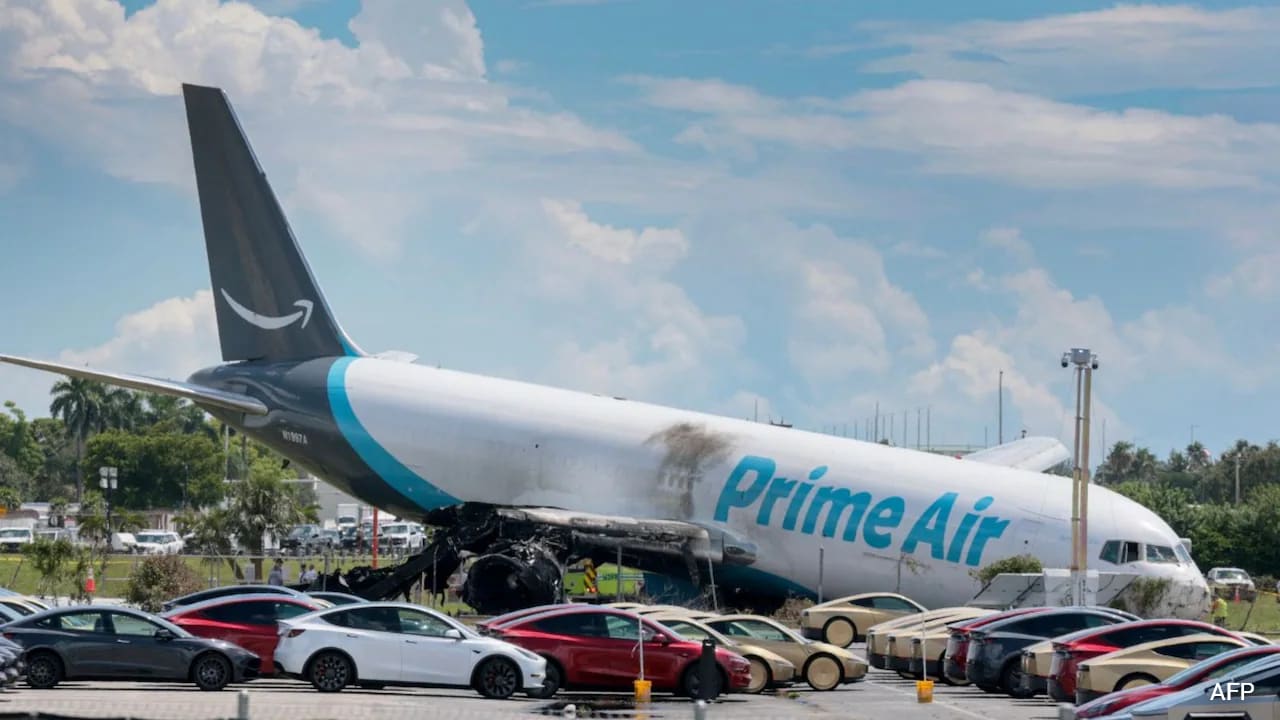
Amazon has suspended its partnership with the cargo carrier 21 Air after one of the airline's planes, loaded with Amazon packages, ran off a runway in Miami last week and killed five people.
The Boeing 767 came in fast on September 6, travelled about 1,300 feet (396 metres) past the end of the runway and struck a van carrying workers of an aircraft cleaning company. All five of those who died were inside the van. Five others were injured.
"After the tragic incident last weekend, we've spent time supporting the investigation and reviewing some of the surrounding circumstances, and we've decided to pause our operations with 21 Air, the operator of Flight 7598," Amazon spokesperson Kelly Nantel said in a prepared statement. "We'll continue working to support the investigation and everyone affected."
21 Air, a North Carolina-based carrier, had flown packages for Amazon since 2024. The company did not immediately respond on Sunday to a request for comment about Amazon's decision.
The suspension means 21 Air aircraft will no longer carry Amazon cargo while the review and the federal investigation continue. Amazon works with a number of carriers that fly freight on its behalf, and 21 Air was one of them.
Investigators with the National Transportation Safety Board are expected to examine the jet's ownership history, weather conditions at the airport, maintenance records and 21 Air's operations. The board has not assigned a cause for the crash, and inquiries of this kind typically take months before findings are published.
Flight information released by the NTSB on September 9 showed that one of the pilots warned the other that they were going too fast as they approached for landing and after touchdown. Cockpit audio recordings also captured a series of automated warnings from the aircraft about its speed of descent and the approaching terrain. The full transcript of the cockpit conversation will not be released until later in the investigation.
According to the flight-tracking site Flightradar24, the 32-year-old Boeing was originally built to carry passengers and flew for several airlines in foreign countries for more than two decades before it was converted into a cargo plane in 2015.
The NTSB's practice is to publish factual reports as an inquiry proceeds, with a preliminary report usually issued within a few weeks and a final report, including a determination of probable cause, often taking a year or more. The board has not said how long its work in this case will take.
The crash has drawn attention to the safety of older aircraft converted for freight use, and to the standards applied to contractors that fly on behalf of large e-commerce companies. Those questions remain open until the investigation concludes.