Akal Takht orders Punjab: Amend anti-sacrilege law within a month
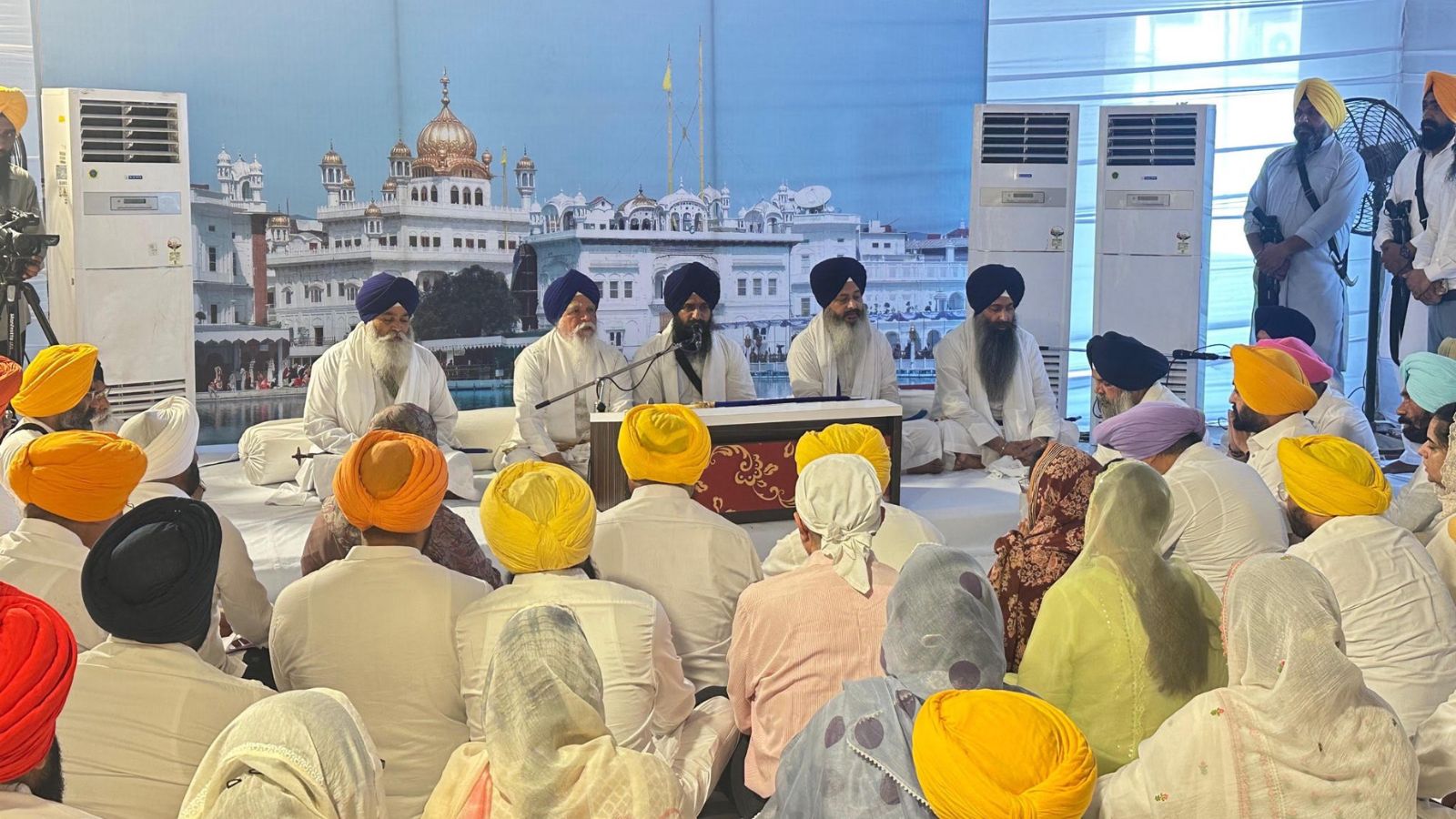
The Akal Takht on Monday gave the Punjab government a one-month deadline to amend the anti-sacrilege law, after ministers and legislators from various parties agreed to revise provisions that the Sikh temporal authority said encroached on matters of religious doctrine and governance.
Last week, the Akal Takht had summoned all 78 Sikh MLAs and nine Sikh ministers to appear before it regarding The Jagat Jyot Sri Guru Granth Sahib Satkar (Amendment) Act, 2026. The Takht stated that the Act had been notified by the Punjab government “without consultation or consent from Sri Akal Takht Sahib, the SGPC and the Guru Khalsa Panth”.
“We will give you our objections in writing; call your House and remove those objections,” Akal Takht Jathedar Kuldip Singh Gargajj told the legislators during the proceedings, which lasted over an hour and a half.
Gargajj was joined by Takht Damdma Sahib Jathedar Tek Singh, Golden Temple head priest Baljeet Singh, and Akal Takht panel priests Keval Singh and Mangal Singh.
The Aam Aadmi Party’s Amritsar South MLA Inderbir Singh Nijjar said the government is ready to make any amendment if needed. However, Gargajj emphasised that the legislature had overstepped by defining religious vocabulary, custodial roles and registry mechanisms — matters that belong to Sikh institutions such as the SGPC and the Takhts.
“We have no objection to punishment — if someone is guilty, give punishment. But you do not have the right to decide on Sikh vocabulary. Sikh vocabulary will be decided by the Akal Takht and the Panth,” Gargajj said. He warned that historical terms such as ‘bir’ cannot be unilaterally replaced by words like ‘saroop’ without Panthic consent, and demanded that the Assembly not “substitute its judgment” on the Sikh code of conduct.
A central focus of the hearing was the Act’s definition of “custodian” and the creation of a central register of saroops with unique identification numbers. Gargajj pressed for precise remedies and demanded that damaged saroops be treated as sacred objects, not private property. “After an incident where a saroop is damaged, it should go to the nearest gurdwara,” he said.
He also warned that posting registry details online could expose private homes and gurdwaras to scrutiny and potential penal action. “If you put unique numbers and put records on a website, everyone will know where each saroop is kept. Who will be held responsible if something goes wrong?” Gargajj asked.
The jathedar acknowledged the need for firm action against deliberate offenders and for protective measures at gurdwaras, including 24-hour sevadaar duty where required. He reiterated that religious definitions, custodial rights, and rules based on the Sikh code of conduct must be determined by the Panth. “Gurmat must decide these questions; the Assembly cannot substitute its judgment,” he said.
Several MLAs admitted they had little time to study the Bill. Congress MLA Tripat Rajinder Singh Bajwa told the jathedar that the Cabinet approved it on April 11, it was posted on the website late on April 12, and they received it on April 13. AAP MLAs Jagrup Singh Gill and Kulwant Singh also said they had not read the full draft before approving it. SAD(B) MLA Ganeev Kaur said she had not attended the Assembly on the day the Bill was passed because the Akal Takht had advised consultation. Congress MLA and former minister Sukhpal Singh Khaira accused the government of secrecy and haste.







