Air Force Day: IAF Chief A.P. Singh Says Operation Sindoor Showed Force Was 'Alert and Ready'
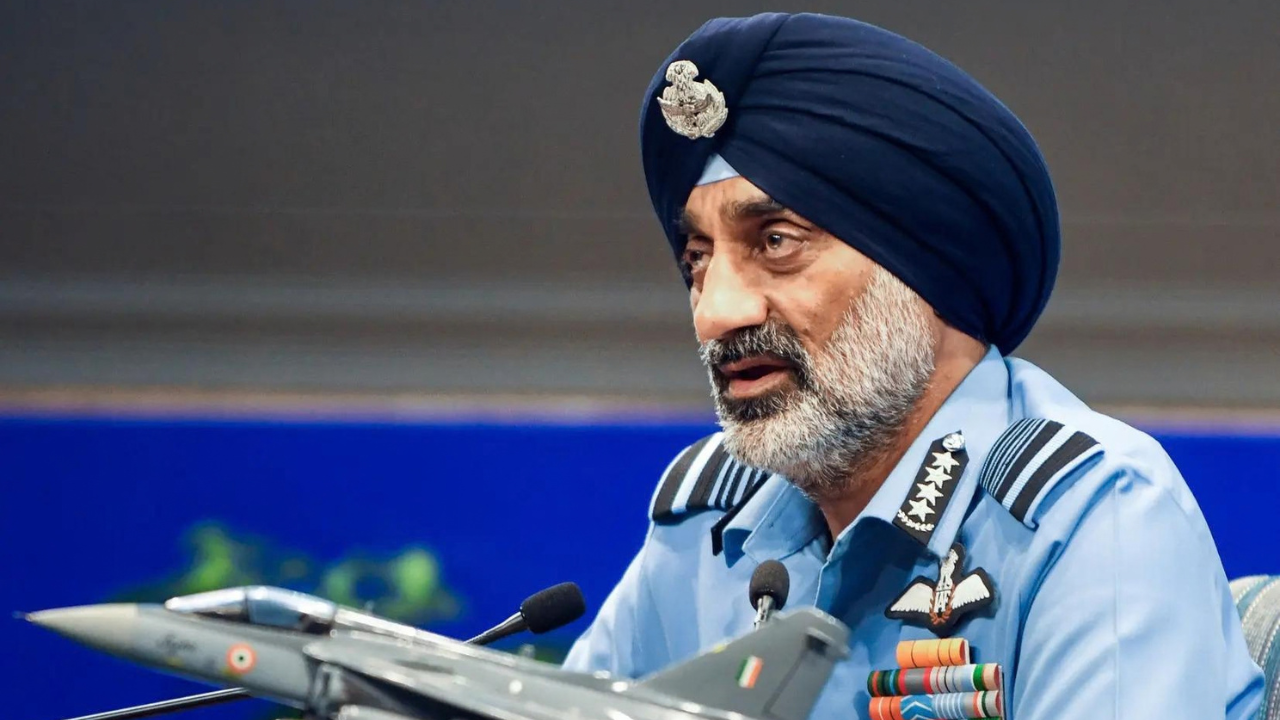
Air Chief Marshal A.P. Singh, Chief of the Air Staff, marked Air Force Day by underlining the Indian Air Force's state of readiness and the speed at which it swung into action during Operation Sindoor, describing the service as "alert and ready".
Air Force Day is observed on 8 October every year, the date on which the Indian Air Force was raised in 1932 as the Royal Indian Air Force. It was renamed the Indian Air Force after India became a republic in 1950. The day is marked with a ceremonial parade, an aerial display and the presentation of honours to serving personnel and units.
Speaking on the occasion, the air chief is reported to have credited the pace of the Air Force's response during Operation Sindoor to sustained training, maintenance discipline and a standing posture of preparedness rather than to last-minute mobilisation. That readiness, he indicated, is the product of work done in peacetime rather than in the days immediately before an operation.
Operation Sindoor was launched in May 2025, weeks after a terror attack at Pahalgam in Jammu and Kashmir on 22 April 2025, in which 26 civilians, most of them tourists, were killed. India said the operation targeted terror infrastructure in Pakistan and Pakistan-occupied Kashmir. The Air Force was one of the three services that took part, alongside the Army and the Navy. Military exchanges continued over four days before India and Pakistan announced on 10 May 2025 that they would stop military action.
Air power, in the air chief's telling, rests less on any single platform than on the system built around it — pilots, maintenance crews, air defence units, radars and logistics chains that keep aircraft flying. A force that is "alert and ready", on this reading, is one whose people and machines are prepared at all times, and not only when a crisis is imminent.
Air Force Day addresses in recent years have also dwelt on the force's modernisation. The induction of the Rafale fighter, the indigenous Light Combat Aircraft Tejas and the Light Combat Helicopter Prachand has formed part of a wider push to reduce dependence on imported equipment. The Air Force has additionally been widening its air defence network and improving its ability to operate from a larger number of bases.
Air Force Day parades have in recent years been held in cities outside the national capital, including Chandigarh, Prayagraj and Chennai, in an effort to bring the event closer to people in different parts of the country.
For the public, the occasion remains one of the few windows into the service's work. Parades and flypasts offer a glimpse of aircraft that are otherwise rarely seen, while awards to personnel — often for acts of courage or technical skill — bring individual stories to attention.
Details of military operations are typically released by the services only after internal review, and independent verification of operational claims is difficult in conflict zones. Accounts of what was achieved, from any side, are best read with that limitation in mind.
What the air chief's remarks underline is that the events of May 2025 did not begin in May. Long before an operation is ordered, an air force depends on training hours, spare parts, serviceable aircraft and a steady supply of skilled people. Public attention usually arrives at the moment of action; the preparation that makes action possible is largely invisible.
India's air power will continue to be judged not only by what it can do in a crisis, but also by whether it can keep enough of its fleet ready at any given time. The emphasis on being "alert and ready" is, in that sense, a statement about the everyday work of the force as much as about any single operation.







