Ahead of Anti-CEC Protest, Delhi Cuts Internet in 4 km Zone; Supreme Court Steps In on Metro
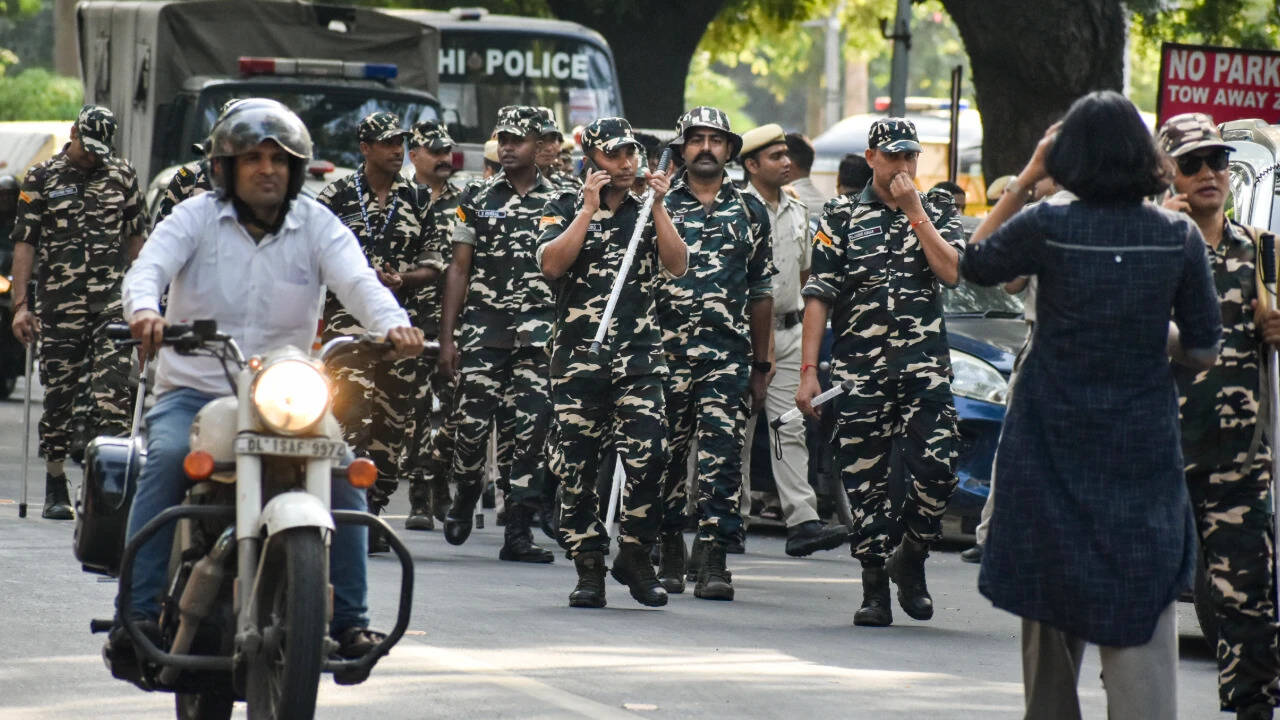
New Delhi: The government on Friday permitted the temporary suspension of internet services within a four-kilometre radius of the Janpath–Kartavya Path crossing, as Delhi Police put in place a series of preventive measures ahead of protests called by several outfits, including the opposition Congress-led INDIA bloc and the Cockroach Janata Party (CJP).
According to a notice issued for the purpose, services will remain suspended from 10 pm on October 9 to 10 pm on October 10. "Instructions have been issued to suspend all forms of mobile internet technology," the notice said.
Senior Delhi Police officers held a high-level meeting at the police headquarters on Friday to review the law-and-order situation ahead of the CJP's proposed protest at Jantar Mantar. The meeting assessed the security situation and reviewed arrangements to maintain order in the national capital, the officers said. They also examined recent observations of the Supreme Court, sources said.
The measures extended to rail and metro travel. The Bikaner Division of North Western Railway announced the cancellation of 13 train services bound for Delhi on Saturday, most of them from Haryana. The railways cited "operational reasons" for the cancellations, which come a day before the protest.
Delhi Police also proposed shutting entry and exit gates at 57 metro stations across the city and reducing train frequency at those stations.
Hours later, a Bench of Chief Justice of India Surya Kant and Justices Joymalya Bagchi and V. Mohana orally asked the Centre to ensure that Delhi Metro operations are not suspended entirely ahead of the protest, stressing that preventive measures should not inconvenience ordinary commuters. The Bench expressed concern over the planned closure of 57 stations, observing that the restrictions could affect students, employees and others dependent on public transport.
"We are concerned with closure of metro services," the CJI-led Bench said, addressing Solicitor General Tushar Mehta, who appeared for the Centre. "One very important principle that we follow for every citizen is the principle of proportionality… You have to prevent certain things. Take measures only to the extent necessary to prevent them. But that does not mean you use a hammer to kill a fly. That principle must be kept in mind," Justice Kant said.
The Solicitor General said he understood the court's concerns and would discuss them with the authorities concerned. He also asked that the CJI's remark not be reported as the court telling the government that it was using a hammer to kill a fly, noting that it was offered as an illustration. The CJI responded, "Exercise caution in abundance. There is nothing wrong with that."
The protests are being called to demand the resignation of Chief Election Commissioner Gyanesh Kumar over the controversy surrounding the Special Intensive Revision (SIR) of electoral rolls.
Suspensions of telecom and internet services of this kind are ordinarily issued under the Temporary Suspension of Telecom Services (Public Emergency or Public Safety) Rules, 2017, which require that reasons be recorded in writing and that such orders be placed before a review committee. Courts have repeatedly held that restrictions on movement, assembly and communication must satisfy the test of proportionality — that they be necessary and the least restrictive measure available in the circumstances.
Delhi Police said security arrangements across the capital have been heightened, with personnel deployed at key locations in central Delhi ahead of the announced programmes.







