After 30 Years, India Plans Recovery of 'Green Boots' Body from Everest
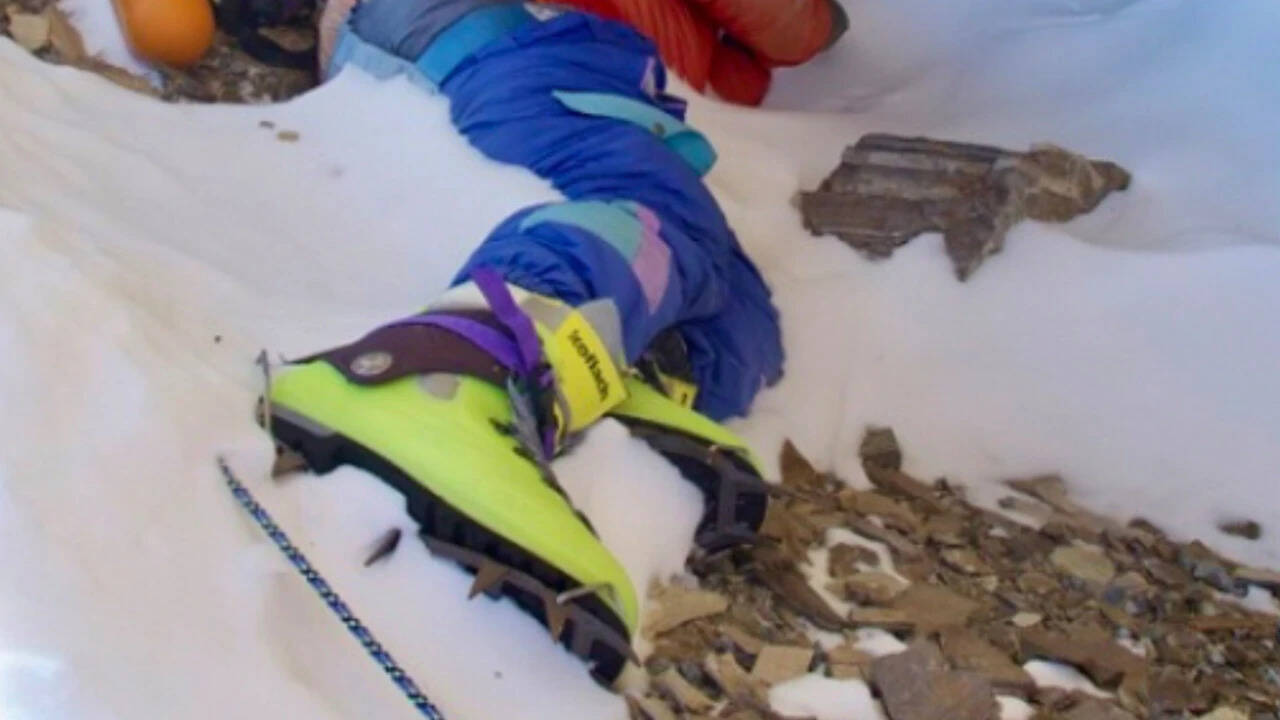
New Delhi: In a move that could bring closure to one of mountaineering's most poignant mysteries, Indian authorities are reportedly planning to recover the body of the climber known as 'Green Boots' from Mount Everest, nearly three decades after his death. The body, a stark landmark along the mountain's northeast ridge, is widely believed to be that of Tsewang Paljor, an Indian climber who perished during the 1996 Everest disaster.
According to reports, a team of climbers and support staff will be dispatched to the mountain in the coming months to retrieve the body, which has become an infamous fixture on the route to the summit. The operation, if successful, would mark one of the highest-altitude body recovery efforts ever attempted.
'Green Boots' gained its name from the bright green Koflach boots worn by the deceased. The body lies in a limestone alcove at around 8,500 metres (27,900 feet), near the base of the First Step on the North Col route. For years, it has served as a grim but reliable waypoint for mountaineers, many of whom have trudged past it without stopping.
The identity of Green Boots has never been officially confirmed, but evidence strongly points to Paljor, a member of the Indo-Tibetan Border Police expedition that was caught in a violent storm on May 10, 1996. That storm claimed eight lives, including Paljor's. His family has long sought to bring his remains home, and news of the planned recovery has been met with a mix of relief and sorrow.
The recovery effort is part of a broader initiative to clean up Everest, which has become littered with discarded equipment, human waste, and the bodies of climbers who have died on its slopes. Over 300 people have perished on the mountain since the first attempt in 1921, and an estimated 200 bodies remain, many used as unofficial markers by passing expeditions.
Environmentalists have long called for the removal of these remains, arguing that the mountain is not a graveyard and that decomposing bodies pose health and environmental risks. The Nepalese government has also stepped up efforts to address the problem, launching clean-up drives and imposing regulations on climbers.
However, recovering a body at such extreme altitude is fraught with challenges. The thin air, freezing temperatures, and treacherous terrain make it a hazardous undertaking, even for experienced mountaineers. Bodies are often frozen into the ice, requiring hours of careful excavation. In 2017, a team successfully brought down a body from the same region, but the task remains highly dangerous.
Indian mountaineering authorities have not yet made an official statement, and details of the expedition remain sketchy. It is unclear whether the operation has the full backing of the Nepalese government, which controls the northern side of Everest. Nepalese officials have previously cited the risks involved and the difficulty of identifying remains as reasons for leaving bodies in place.
For Paljor's family, however, the news brings a glimmer of hope. His brother, Tsewang Smanla, has repeatedly appealed to authorities to bring his sibling home. In an earlier interview, he said, "We want to perform his last rites as per our traditions. It is our duty as his family."
The planned recovery also highlights broader questions about the commercialization of Everest and the toll it takes on those who dare to climb it. The 1996 disaster, chronicled in Jon Krakauer's bestseller 'Into Thin Air', brought global attention to the perils of high-altitude mountaineering and the ethical dilemmas faced by climbers who encounter the dead.
As the world watches, the recovery of Green Boots may serve as a reminder that even in the most extreme corners of the Earth, respect for the dead is a measure of our humanity. If successful, it will not only clear a path on the mountain but also honour the memory of a man who was a husband, father, and son.
For now, the effort remains in planning stages, but the mere announcement has reignited conversations about accountability, safety, and the true cost of climbing the world's highest peak.