After 26-year wait, SC ensures Shaurya Chakra awardee's widow gets pension
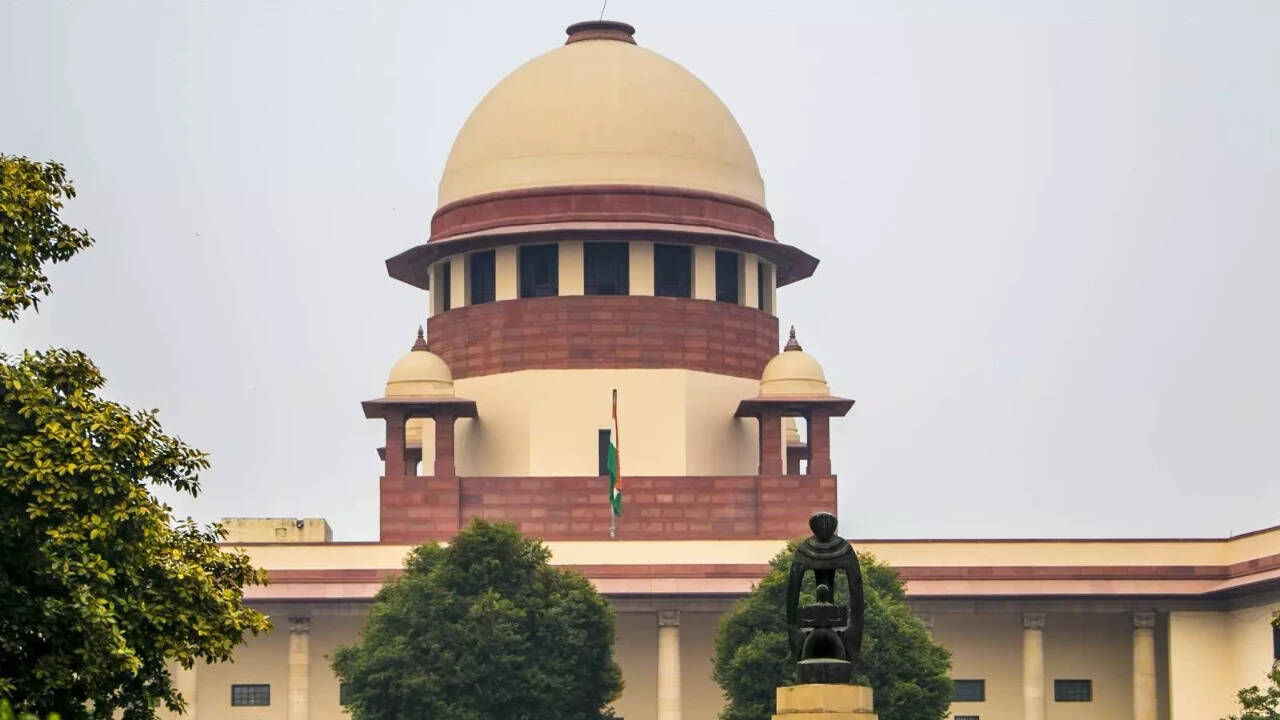
The Supreme Court has intervened to end a 26-year-long struggle for the widow of a Shaurya Chakra awardee, directing the Central government to pay her the Special Family Pension she was entitled to since her husband's death. The ruling also came with a strong observation that such families should not be forced to approach courts for relief that is rightfully theirs.
The case concerns Mohan Singh, an overseer with the General Reserve Engineer Force (GREF), who was killed on July 10, 2000, while saving his colleagues from a falling boulder at a border road construction site. He was posthumously awarded the Shaurya Chakra in 2001, the country's third-highest peacetime gallantry award.
Despite this recognition, his widow was given relief only under the Workmen's Compensation Act, not the Special Family Pension under the CCS (Extraordinary Pension) Rules. The government rejected her claim on the ground that since compensation under the Workmen's Compensation Act had been paid, no liberalised pensionary award was due under the CCS (Pension) Rules.
She moved the Punjab and Haryana High Court, which ruled in her favour. The court held that she was entitled to extraordinary pension, but restricted the payment of arrears to the date of filing the petition, meaning she would not get benefits for the period from her husband's death to the date of filing. That decision was challenged before the Supreme Court.
Hearing the matter, a bench of Justices K V Viswanathan and Arun Palli observed that the government had erred in its classification. The case should have been placed under category 'C' of the CCS Pension Rules, which would have extended the benefit to the widow soon after Singh's demise. The bench also noted that families of deceased personnel should not have to run from pillar to post for what is legally theirs.
“These are not matters where the family or the widow should be expected to go to the court to obtain relief,” the court said.
During the hearing, Attorney General R Venkataramani informed the court that Rs 14.28 lakh had already been paid to the widow, and that her pension would be processed according to the High Court's order. He also said that arrears of Rs 4.12 lakh had been released to her.
The Supreme Court, however, found that this was insufficient. It directed the government to pay a consolidated amount of Rs 10 lakh to the widow for the period between Singh's death and the High Court's order, in addition to the amounts already disbursed.
The ruling is a reminder that official apathy can often compound the grief of families who have sacrificed for the nation. It also underscores the importance of timely and correct application of rules by government departments, especially in matters involving gallantry awardees and their dependants.
Observers note that the judgment may set a precedent for similar cases where families have been denied benefits due to procedural lapses. The Supreme Court's observation that widows and families should not be expected to seek judicial intervention for their due rights is being seen as a strong message to the executive to act with sensitivity and speed.







