33,000 deaths in five years: Civic failures behind urban safety crisis
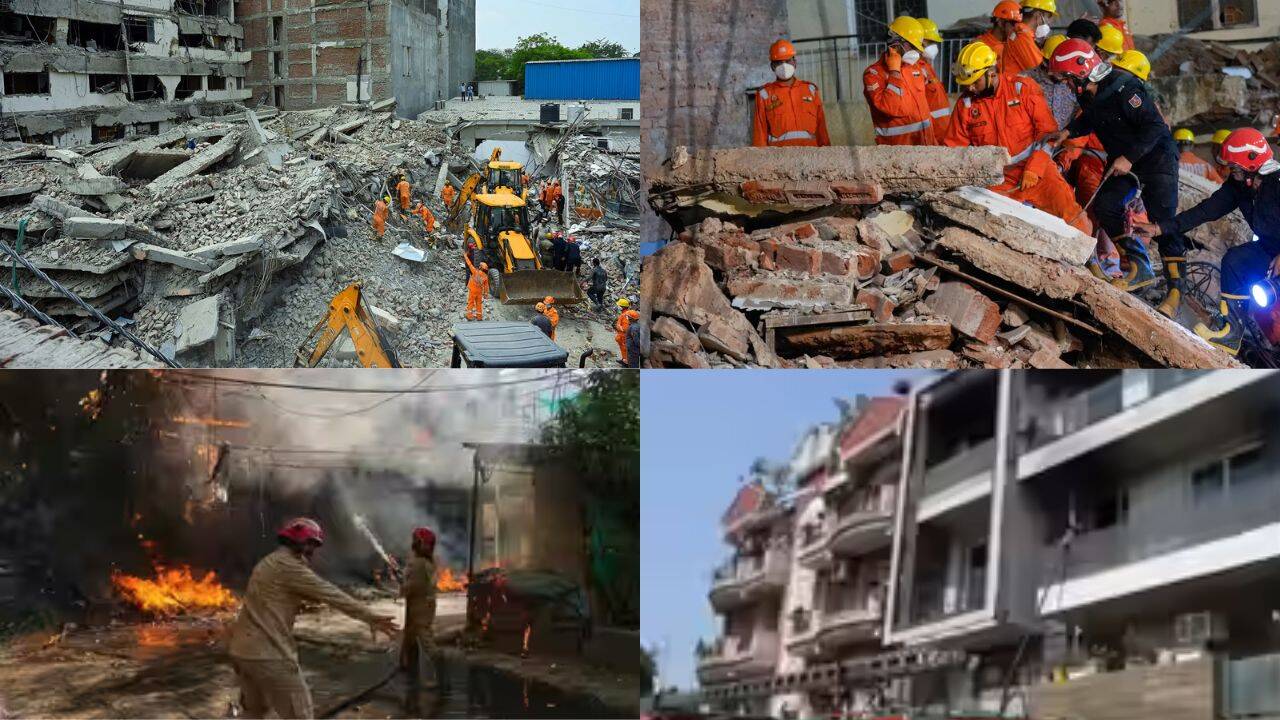
NEW DELHI: Nearly 33,000 people died between 2020 and 2024 in incidents involving building collapses, fires, and falls into pits and manholes across India, according to government data. The figures, drawn from National Crime Records Bureau (NCRB) reports, reveal that a significant majority of these deaths occurred in urban areas, underscoring serious gaps in civic governance and enforcement of safety regulations.
The actual number of such deaths is likely to be higher, as data on road deaths within municipal limits—many caused by potholes—and fatalities linked to contaminated water are not separately maintained. Experts say these incidents are largely preventable and often result from poor upkeep of public infrastructure, unsafe buildings, and non-compliance with existing safety norms.
Recent tragedies in Delhi, including incidents in Satya Niketan, Hauz Rani, Palam, and Vivek Vihar, have drawn public attention. Similarly, flooding in parts of Gurugram and Delhi, along with accumulation of garbage, are being cited as indicators of deteriorating municipal management.
Former urban development secretary M. Ramachandran said the problem lies in a lack of accountability. “There is a lack of will to address the issues and no one wants to take responsibility. Every corporator or councillor, municipal officer and mayor needs to take responsibility. In every budget, mayors must inform people what they have done, where they have failed and what they would do. Accountability at each level is necessary,” he said.
P.S.N. Rao, dean of the School of Planning and Architecture, Delhi, pointed out that municipal authorities already have the legal framework needed to act. “Municipal authorities only need to follow the law and enforce rules that are already laid down. How many municipal commissioners tour different parts of cities? It’s the duty of municipal officers to carry out regular inspections to identify dangerous buildings and take necessary action. There is no alternative to strict enforcement. When there is a red signal, you must stop; else there will be an accident. It’s as simple as that,” he added.
A retired civil servant who served in the urban development ministry and in senior state positions said the core issue is weak supervision from the top. “There is adequate manpower. Across cities you will find municipal officers knocking at the door when one starts any construction work. So, there is no shortage of hands for monitoring purposes. ‘Fish rots from the head’, as the Japanese saying goes, and things must start from the top,” he said on condition of anonymity.
Experts also warned that the government’s push for ease of construction and deregulation must be balanced with safety oversight. One former official said the distinction between deregulation aimed at boosting economic activity and deregulation that erodes civic order has been lost. “Officers are unable to draw the line and have stopped attending to routine work under the guise of deregulation. An important side-effect has been de-skilling, as they are no longer able to decide and act,” he said.
The data and expert observations point to a systemic failure in urban governance. While the immediate cause of each tragedy may differ, the underlying issues are consistent: inadequate enforcement of building codes, lack of regular inspections, poor maintenance of public spaces, and a governance culture that avoids responsibility. Without a clear mechanism for accountability and a renewed commitment to enforcing existing rules, urban residents remain vulnerable to avoidable deaths.
Officials and planners stress that solutions are available within the current legal framework. What is required is political will, transparent reporting, and consistent oversight. Citizens, too, have a role in demanding responsiveness from their local representatives. As the experts note, the law is not vague—it needs to be applied without exception.