17 years after Singur, Mamata Banerjee meets Tata chief to boost Bengal ties
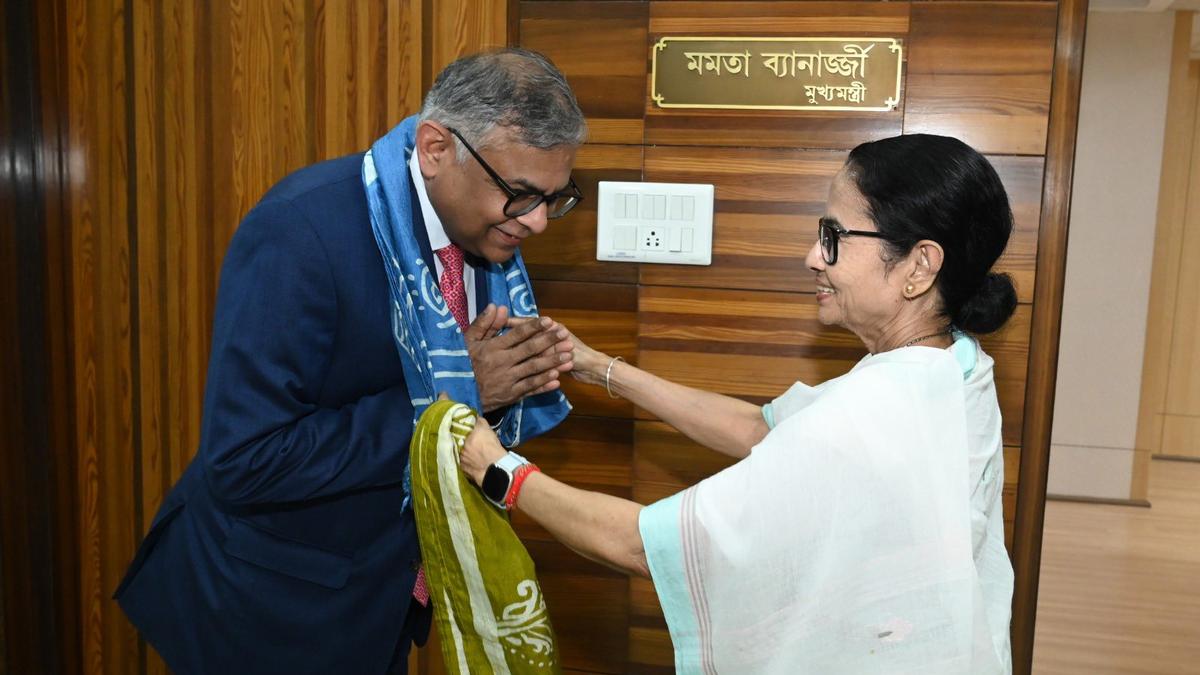
West Bengal Chief Minister Mamata Banerjee met Tata Group chairperson Natarajan Chandrasekaran on Wednesday, July 9, 2025, in Kolkata. The meeting, held in the presence of Chief Secretary Manoj Pant, was described by the Trinamool Congress as an effort to deepen the group's presence in the State.
The party's official X handle shared a video of the interaction, stating: “Their conversation centred on deepening the Tata Group’s presence in the State, underscoring Bengal’s emergence as a preferred destination for forward-looking industry leaders.”
The meeting is significant given the complex history between West Bengal and the Tata Group. In 2008, the conglomerate’s then-chairperson, Ratan Tata, announced the withdrawal of the Tata Nano car factory from Singur in Hooghly district. The decision followed months of protests by farmers and political agitation led by Ms. Banerjee, who was then in opposition. Farmers opposed the acquisition of their land, arguing that compensation was inadequate and that the fertile, multi-crop land was essential for their livelihoods.
The Singur movement became a turning point in West Bengal’s politics. It propelled the Trinamool Congress to victory in the 2011 Assembly elections, ending the 34-year rule of the Left Front led by the Communist Party of India (Marxist). After assuming office, Ms. Banerjee announced that the acquired land would be returned to farmers. The Supreme Court later declared the acquisition illegal, and in 2016, 997 acres were handed back to the original landowners.
Mr. Chandrasekaran, who has been Tata Sons chairman since 2017, is scheduled to step down in February 2027, according to earlier company announcements. Wednesday’s meeting comes ahead of the 2026 Assembly elections in West Bengal, prompting political observers to note that the state government is keen to project an image of economic revival and investment friendliness.
On Tuesday, Ms. Banerjee also met Vietnam’s Ambassador to India, Nguyen Thanh Hai, to discuss bilateral trade and commerce ties between Vietnam and West Bengal. This is part of a broader outreach by the state government to attract domestic and foreign investment.
The Tata Group continues to have a substantial presence in West Bengal through companies such as Tata Steel, Tata Motors, Tata Consultancy Services, and Tata Global Beverages. The Nano factory, which was relocated to Gujarat, remains a symbol of the past discord. However, neither side has indicated any specific investment commitments from the meeting.
The Bharatiya Janata Party questioned the timing of the meeting, asking whether it was driven by politics or development. The Chief Minister’s office did not respond to the query. No official statement on specific projects was issued after the interaction.
West Bengal has been competing with other states to attract capital, focusing on sectors such as logistics, information technology, and manufacturing. Whether the Tata Group will announce new projects in the state is not yet known, but both sides have described the meeting as positive and constructive.







